Subtotal $0.00

Feel Free To Contact Us at
- Phone:(888)-896-5577
- Email:dr.koffler@hmwcenter.com

Subscribe to our Newsletter and get the latest updates in the field of Holistic Medicine
Do you frequently notice redness across your cheeks, nose, or central face? Or does your skin suddenly feel hot, sting, burn, or develop small acne-like bumps?
Rosacea is a common inflammatory skin condition that can cause persistent facial redness, flushing, visible blood vessels, burning or stinging, and acne-like breakouts. It can also affect the eyes, causing dryness, irritation, or other ocular symptoms.
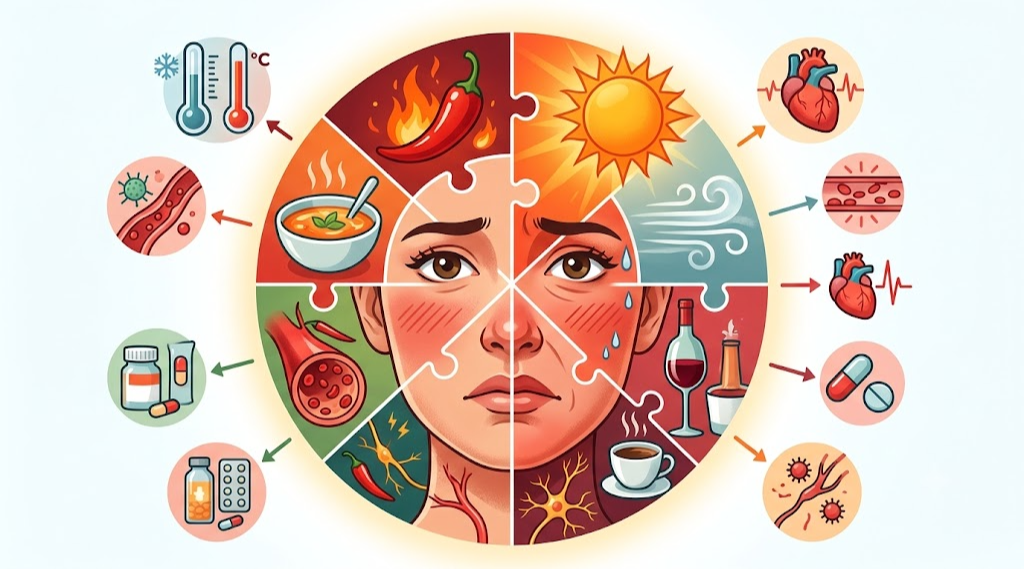
Rosacea can be difficult to manage because different people experience different triggers. Sunlight, heat, stress, alcohol, spicy foods, exercise, cold or wind, and certain skincare products can contribute to flare-ups in some individuals.
This is where functional medicine takes a different approach. Rather than looking only at the visible skin symptoms, it considers the broader factors that may contribute to inflammation and flare-ups—from nutrition and stress to gut health, lifestyle, environmental triggers, and overall wellness.
The goal isn’t to promise a cure for rosacea, but to identify potential contributing factors, reduce avoidable triggers, support healthy skin function, and complement appropriate medical treatment.
Rosacea is a chronic skin condition that primarily affects the face. It commonly causes flushing or persistent color changes, particularly around the cheeks, nose, chin, and central face.
Depending on the individual, rosacea may cause:
Rosacea can sometimes be mistaken for acne, eczema, sunburn, or other skin conditions. Because several conditions can produce similar symptoms, proper diagnosis by a healthcare professional is important.
There is currently no cure for rosacea, but appropriate treatment and trigger management can help control symptoms and reduce flare-ups.
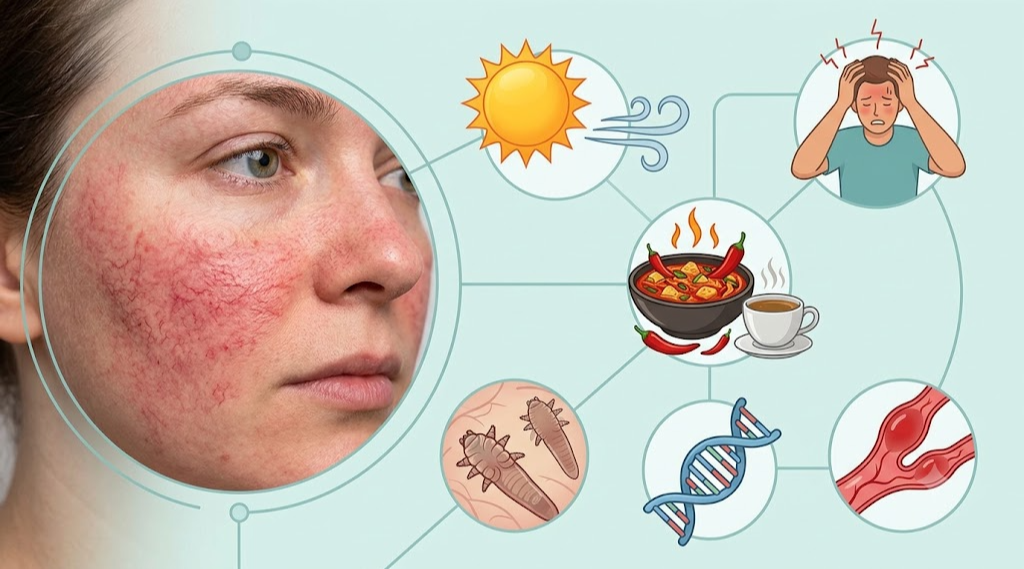
The exact cause of rosacea is not fully understood. Research suggests that several factors involving the immune system, nervous system, blood vessels, genetics, and environmental triggers may play a role.
Common contributing factors and triggers include:
Inflammation is believed to play an important role in rosacea.
Certain triggers may activate immune and inflammatory responses in susceptible individuals, contributing to flushing, redness, swelling, and acne-like breakouts.
Sunlight is one of the most commonly reported rosacea triggers.
UV exposure can cause flushing and may worsen persistent facial redness. Dermatologists recommend daily broad-spectrum sun protection for people with rosacea.
Hot weather, hot showers, heated environments, and sudden temperature changes can trigger flushing in some people.
Keeping the skin cool and avoiding excessive overheating may help reduce episodes.
Emotional stress can trigger or worsen rosacea flare-ups in some individuals.
Stress may also affect sleep, eating patterns, and other behaviors that can indirectly influence skin health.
Certain foods and drinks can trigger symptoms in some people.
Commonly reported triggers include:
Triggers are highly individual, so avoiding every potential trigger is not necessarily appropriate. Identifying personal patterns may be more useful.
Rosacea-prone skin can be particularly sensitive.
Fragrance, alcohol, certain acids, menthol, camphor, and other irritating ingredients may aggravate sensitive skin in some individuals.
Wind, cold temperatures, heat, and other environmental exposures can contribute to flare-ups.
The relationship between gut health and rosacea is an area of ongoing research. Digestive symptoms and certain gastrointestinal conditions have been studied in relation to rosacea, but this does not mean that gut problems are the cause of rosacea in every individual.
A functional medicine evaluation may consider digestive health as one part of a broader assessment rather than assuming that gut dysfunction is responsible for every flare-up.
Rosacea can affect the skin, eyes, and overall comfort.
Some individuals experience:
Rosacea can also affect the eyes and eyelids.
Possible symptoms include:
Ocular symptoms should not be ignored because more significant eye involvement may require evaluation by an eye-care professional.
Visible facial changes can also affect emotional well-being.
Some individuals may experience:
If rosacea symptoms persist or interfere with daily life, medical evaluation is recommended.
Rather than viewing rosacea as only a skin problem, functional medicine asks:
“What factors may be contributing to inflammation and repeated flare-ups?”
Instead of focusing only on visible redness or breakouts, practitioners may consider the individual’s overall health, nutrition, stress, sleep, digestive symptoms, lifestyle, medications, skincare routine, and environmental exposures.
Core principles include:
This approach is intended to complement, not replace, evidence-based dermatological treatment.
One of the important aspects of a functional medicine approach is understanding the individual factors that may be associated with recurrent flare-ups.
Depending on symptoms and medical history, practitioners may recommend:
A healthcare professional may evaluate:
Because rosacea can resemble acne, eczema, or other disorders, appropriate diagnosis is important.
A detailed review may examine:
Dietary changes should be personalized rather than based on unnecessarily restrictive elimination diets.
For individuals with digestive symptoms, an evaluation may consider:
Further testing should be based on clinical symptoms and individual circumstances.
A comprehensive review may include:
Testing recommendations vary depending on individual needs and symptoms.
Once potential triggers and contributing factors are identified, treatment focuses on reducing avoidable flare-ups while supporting overall health and appropriate medical care.
Rosacea-prone skin can be highly sensitive.
Dermatologists generally recommend:
A gentle skincare routine can help reduce irritation and support the skin barrier.
Sun exposure can trigger rosacea flare-ups and worsen facial redness.
Daily sun protection may include:
For sensitive rosacea-prone skin, mineral sunscreens containing zinc oxide or titanium dioxide may be better tolerated by some individuals.
Not every rosacea trigger affects every person.
Keeping a simple rosacea diary may help identify patterns between symptoms and:
The American Academy of Dermatology recommends tracking potential triggers over time because triggers can vary significantly between individuals.
A functional medicine approach may emphasize an overall nutrient-dense eating pattern rather than a universal "rosacea diet."
This may include:
If a particular food consistently appears to trigger symptoms, an individualized dietary approach may be considered.
However, unnecessary elimination of multiple food groups can create nutritional gaps and should be avoided without appropriate guidance.
Stress can trigger rosacea flare-ups in some individuals.
Functional medicine may recommend:
Reducing stress may not eliminate rosacea, but it can help address one potential trigger while supporting overall well-being.
For individuals experiencing digestive symptoms alongside rosacea, improving overall digestive health may be part of a broader wellness plan.
Depending on individual needs, this may involve:
Gut-focused interventions should be individualized because there is not enough evidence to conclude that every person with rosacea has a gut imbalance that needs treatment.
Avoiding overheating can help reduce flushing for some individuals.
Strategies may include:
You do not necessarily need to stop exercising. Adjusting intensity and exercising in cooler environments may help reduce exercise-related flares.
Functional medicine should complement appropriate dermatological care.
Depending on the symptoms, a dermatologist may recommend prescription medications, topical treatments, oral medications, or procedures such as laser or light therapy.
For example, dermatological treatment may target persistent facial redness, acne-like breakouts, or ocular symptoms differently.
A personalized plan may combine medical treatment with trigger management, gentle skincare, nutrition, stress management, and other supportive strategies.

Rather than focusing only on temporary improvements in redness, comprehensive rosacea management aims to improve symptom control and quality of life.
Potential benefits include:
Fewer Flare-Ups
Identifying personal triggers may help reduce the frequency or severity of some flare-ups.
Better Skin Comfort
Gentle skincare and appropriate treatment may help reduce burning, stinging, dryness, and irritation.
Improved Skin Barrier Support
Consistent moisturizing and avoiding irritating products can support the skin’s protective barrier.
Better Trigger Awareness
Understanding individual triggers can make it easier to anticipate and manage flare-ups.
Improved Confidence
Better symptom control may reduce self-consciousness associated with visible facial changes.
Better Overall Wellness
Addressing sleep, stress, nutrition, physical activity, and other lifestyle factors can support overall health while rosacea is being medically managed.
Individual outcomes vary depending on rosacea subtype, severity, triggers, treatment, and overall health.
Functional medicine may be worth considering if you:
Functional medicine is not a replacement for dermatological evaluation or prescribed treatment.
If you experience significant eye symptoms, rapidly worsening symptoms, or persistent facial changes, medical evaluation is particularly important.
Rosacea is more than occasional facial redness. Recurrent flushing, persistent discoloration, burning, sensitivity, breakouts, and eye symptoms can affect both physical comfort and quality of life.
Functional medicine offers a personalized, whole-body approach that considers potential triggers and contributing factors such as nutrition, stress, sleep, digestive health, skincare, environmental exposures, and lifestyle.
While there is currently no cure for rosacea, appropriate medical treatment combined with trigger management and gentle skincare can help control symptoms and reduce flare-ups.
If you’re struggling with recurring rosacea symptoms, a comprehensive evaluation may help you better understand your individual triggers and develop a personalized plan for supporting healthier skin and overall wellness.
Rosacea is a chronic inflammatory skin condition that commonly causes facial flushing, persistent redness, visible blood vessels, acne-like bumps, burning, or stinging. It may also affect the eyes.
The exact cause is not fully understood. Genetics, immune responses, blood-vessel activity, nervous-system factors, and environmental triggers may all play a role.
Common triggers include sunlight, heat, stress, alcohol, spicy foods, exercise, hot beverages, cold or wind, and certain skincare products. Triggers vary from person to person.
Diet does not cause rosacea in every person. However, certain foods or beverages can trigger flare-ups in some individuals. Identifying personal triggers is generally more useful than following a restrictive diet without a clear reason.
The relationship between digestive health and rosacea is being studied. Some individuals may have digestive symptoms alongside rosacea, but there is not enough evidence to conclude that gut dysfunction is the cause of rosacea in everyone.
Yes. Stress is a recognized trigger for some people with rosacea. Stress-management techniques may help reduce stress-related flare-ups.
A gentle routine is generally recommended. Use a mild cleanser, fragrance-free moisturizer, and appropriate sunscreen while avoiding products that irritate your skin.
There is currently no cure for rosacea. Functional medicine may help identify lifestyle and health factors that could contribute to flare-ups, but it should complement appropriate medical treatment rather than be presented as a cure.
You should seek medical evaluation for persistent facial redness, recurring flare-ups, worsening symptoms, or symptoms involving the eyes. Ocular symptoms may require evaluation by an eye-care professional.
Yes. Although rosacea is chronic and does not currently have a cure, many people can manage symptoms through appropriate medical treatment, gentle skincare, sun protection, and identification of personal triggers.
Ready to Take Control of Your Rosacea?
Get personalized guidance to identify potential triggers and support healthier, more comfortable skin.