Subtotal $0.00

Feel Free To Contact Us at
- Phone:(888)-896-5577
- Email:dr.koffler@hmwcenter.com

Subscribe to our Newsletter and get the latest updates in the field of Holistic Medicine
You type at a computer for hours. You grip tools throughout the day. You repeat the same lifting, reaching, pressing, or wrist movement hundreds of times.
At first, the discomfort may feel minor—a tight shoulder, aching forearm, sore neck, or painful elbow. But when the same movement continues day after day, the pain can become harder to ignore.
This is often how a repetitive strain injury (RSI) develops.
Repetitive strain injuries can affect muscles, tendons, and nerves and may occur because of repeated stress or overuse. Common examples include tennis elbow, tendinopathy, chronic muscle strain, and nerve-entrapment conditions such as carpal tunnel syndrome.
For some people, repetitive activity also contributes to painful myofascial trigger points—localized areas of muscle that are tender and may reproduce or refer pain.
This is where trigger point injections (TPI) may have a role.
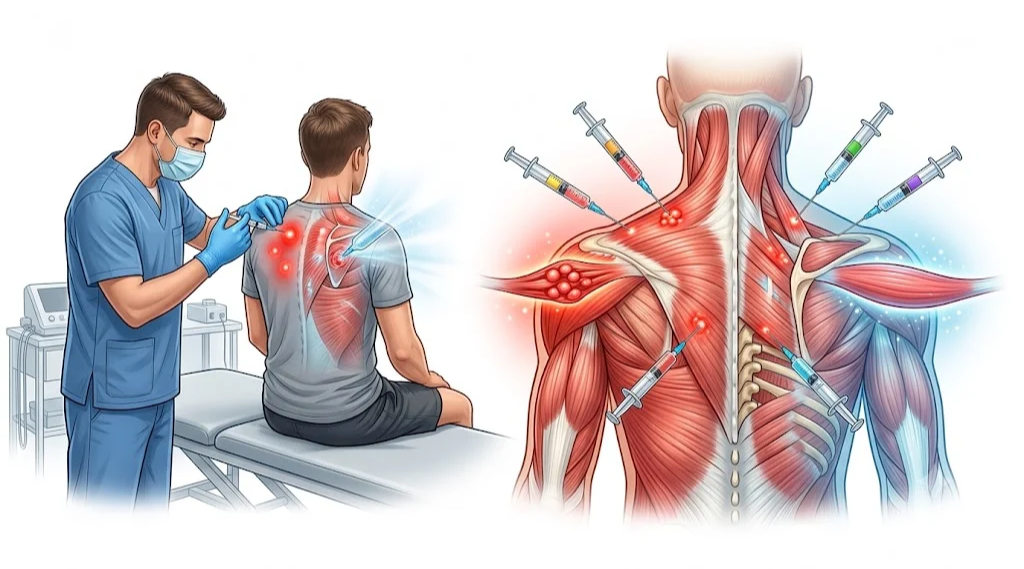
Trigger point injections for repetitive strain injuries may help when ongoing overuse has contributed to localized myofascial pain and active muscle trigger points.
TPI involves placing a small needle into a painful trigger point, sometimes with a local anesthetic or another medication depending on the clinical situation.
Important Clinical Distinction
However, TPI does not repair every type of repetitive strain injury. If the primary problem involves a tendon, ligament, joint, or compressed nerve, the appropriate treatment may be different.
A proper evaluation is therefore important before deciding whether TPI is appropriate.

Repetitive strain injuries are conditions that develop when tissues are repeatedly exposed to stress or overuse.
Unlike an acute injury that happens from a single event, an overuse injury may develop gradually.
Repetitive movements can place stress on:
RSIs can occur during work, exercise, sports, hobbies, or everyday activities.
For example, someone who spends hours typing may develop wrist or forearm symptoms. A tennis player may develop lateral elbow pain. A person whose job involves repetitive lifting may develop shoulder or neck discomfort.
NIAMS notes that chronic musculoskeletal injuries can result from repetitive overload and may develop gradually over time.
Symptoms depend on which tissues are affected and how severe the condition has become.
Common symptoms may include:
For example, tendon overuse injuries commonly cause pain that becomes worse when the affected tendon is stretched or the attached muscle is activated.
Persistent symptoms should not automatically be assumed to be a simple muscle strain. Nerve compression, tendon disorders, arthritis, and other conditions can produce similar symptoms.
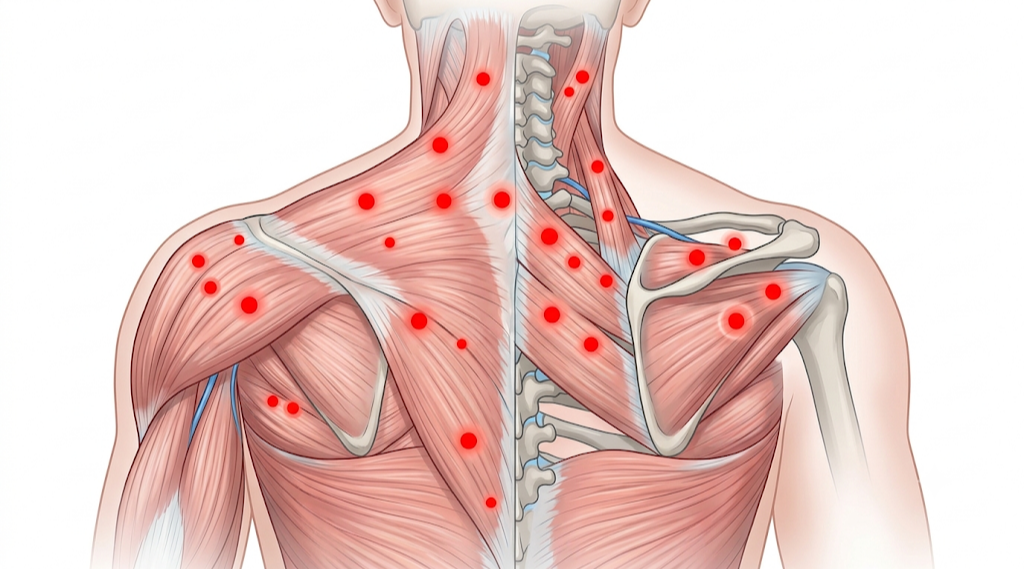
A trigger point is a painful area within muscle that can be associated with localized or referred pain.
When repetitive activity causes a muscle to remain under excessive load, some people may develop persistent muscular tightness and myofascial pain.
A clinician may identify a suspected trigger point during a physical examination by evaluating:
This distinction matters because not every painful area is a trigger point.
For example, pain caused primarily by carpal tunnel syndrome or a significant tendon injury may require a different treatment approach.
During a TPI procedure, a trained healthcare professional identifies the painful trigger point and inserts a small needle into the targeted area.
Depending on the patient’s condition and treatment plan, the injection may involve a local anesthetic or another medication.
The objective is to decrease localized pain and make movement or rehabilitation easier.
Research on trigger point injections has produced mixed findings, particularly regarding whether one injectable substance is consistently superior to another. A systematic review of chronic myofascial neck and back pain found that available studies did not establish one injectate as clearly superior.
This is why TPI should generally be considered as one component of a broader treatment plan, rather than a standalone cure for repetitive strain.

TPI may be considered when an evaluation suggests that myofascial trigger points are contributing significantly to the patient’s pain.
This may be particularly relevant when:
The purpose is not simply to eliminate pain temporarily.
Reducing pain may allow a person to participate more comfortably in corrective exercises, strengthening, stretching, ergonomic changes, and other rehabilitation strategies.
One of the most important things to understand is that pain relief and injury correction are not always the same thing.
Imagine someone develops forearm pain because of repetitive computer use. An injection might reduce pain from associated muscular trigger points. But if the person continues working with poor ergonomics for eight hours every day, the factors contributing to the problem remain.
That is why a comprehensive treatment plan may include:
Reducing or temporarily modifying the movement that aggravates the injury can give irritated tissues an opportunity to recover.
NIAMS advises against simply working through pain from an injury because continuing the aggravating activity may cause additional harm.
Physical therapy may help restore strength, mobility, coordination, and function. For tendon overuse injuries, targeted stretching and strengthening exercises may help reduce symptoms and improve function.
For work-related repetitive strain, changing the environment may be just as important as treating the pain. Depending on the activity, this could involve:
Once pain allows, progressively strengthening the affected muscles can help improve their ability to tolerate the demands placed on them.
Depending on the diagnosis, treatment may also include medication, bracing, acupuncture, manual therapy, or other rehabilitation approaches.
Research supports TPI as a potential treatment for certain types of myofascial pain, but the evidence is not uniform.
A 2023 systematic review and meta-analysis of four randomized controlled trials found that TPI reduced pain more than medical management alone in patients with acute myofascial pain.
At the same time, research involving chronic myofascial pain has produced more mixed findings. A systematic review of TPI for chronic neck and back pain found considerable variation between studies and could not establish that one injection substance was consistently better than another.
More recent research on trigger-point needling has also reported improvements in pain and disability, although the authors noted the need for stronger clinical trials.
The practical takeaway is that TPI may be useful for selected patients, but it should be based on an appropriate diagnosis rather than used automatically for every repetitive strain injury.
Yes.
In many cases, the most useful role of TPI may be as part of a broader rehabilitation strategy.
For example, a treatment plan could involve:
This approach addresses both the current symptoms and the factors that may have contributed to the injury.
HMW’s sports injury rehabilitation program includes individualized approaches such as strengthening exercises, home exercises, joint mobilization, myofascial release techniques, and other rehabilitation strategies depending on the injury.
The goal is not simply to make pain disappear temporarily. It is to help restore movement and function while reducing the likelihood of repeatedly aggravating the same problem.
Before treatment, the provider should review your symptoms and medical history and perform an appropriate examination.
The clinician may determine:
During the procedure, the treatment area is cleaned and the needle is directed into the selected trigger point.
Afterward, some people may experience temporary soreness at the injection site.
Your provider will give you individualized instructions about activity, exercise, and follow-up.
TPI is generally considered a minimally invasive procedure, but no injection is completely risk-free.
Potential complications can include:
The risks depend partly on the location being treated and the substance used.
Because of this, TPI should be performed by an appropriately trained healthcare professional after determining that the procedure is suitable.

Consider medical evaluation when pain:
Persistent or severe symptoms may indicate something other than a simple muscle-related problem.
For example, repetitive strain can be associated with nerve entrapment conditions such as carpal tunnel syndrome, which require specific evaluation and management.
Treatment is only one part of the picture.
Preventive strategies may include:
Repetitive strain injuries are often linked to repeated movements, inadequate recovery, improper technique, or excessive workload.
There is no single injection that is appropriate for every repetitive strain injury.
At Holistic Medical Wellness, evaluation considers key individual factors to build an accurate clinical picture:
When muscular trigger points are contributing to symptoms, trigger point injections may be considered as part of an individualized pain-management plan.
Depending on the diagnosis, treatment may also involve physical rehabilitation, strengthening, myofascial techniques, acupuncture, or other supportive approaches. HMW’s sports injury rehabilitation program is designed around the individual’s injury and functional goals.
The Goal: Help you move from simply managing pain to understanding why the pain developed and what can be done to reduce the chance of it returning.
Trigger point injections for repetitive strain injuries may provide targeted relief when myofascial trigger points are an important source of pain.
But TPI should not be viewed as a universal treatment for RSI.
Repetitive strain injuries can involve muscles, tendons, nerves, or other structures, and the treatment needs to match the underlying problem. Conservative care, physical rehabilitation, ergonomic changes, and gradual strengthening often remain important parts of recovery.
If persistent muscular pain is making rehabilitation difficult, a medical evaluation can help determine whether trigger point injections are an appropriate option for you.
They may help when myofascial trigger points are contributing to pain. They do not directly treat every type of RSI, such as nerve compression or a significant tendon injury.
The duration varies considerably between individuals and depends on the underlying condition, treatment approach, and other rehabilitation measures. Your provider can discuss what may be realistic for your situation.
They serve different purposes. TPI may help reduce localized pain, while physical therapy can address strength, mobility, movement patterns, and function. They may sometimes be used together.
Yes. If the activity, ergonomic issue, movement pattern, or workload contributing to the injury is not addressed, symptoms can return.
Not necessarily. Carpal tunnel syndrome involves compression of the median nerve and requires a specific evaluation. A trigger point injection may be considered only when there is a separate muscular pain component that warrants treatment.
Both involve placing a needle into targeted tissue, but they are different procedures. Trigger point injections introduce an injectable substance, while dry needling generally does not. Research has not established that one approach is universally superior for all myofascial pain conditions.
Activity recommendations vary depending on the treated area and the underlying injury. Your provider may recommend modifying activity temporarily before gradually returning to rehabilitation exercises.
Ready to take the next step?
Schedule a consultation with Holistic Medical Wellness to discuss your repetitive strain symptoms