Subtotal $0.00

Feel Free To Contact Us at
- Phone:(888)-896-5577
- Email:dr.koffler@hmwcenter.com

Subscribe to our Newsletter and get the latest updates in the field of Holistic Medicine
No. Testosterone replacement therapy (TRT) can be an appropriate medical treatment for men with confirmed testosterone deficiency, but it is not a universal solution for fatigue, reduced libido, weight gain, or age-related changes.
Testosterone naturally changes throughout a man’s life. However, persistent symptoms accompanied by consistently low testosterone levels may indicate a medical condition called hypogonadism.
Before considering TRT, men need an appropriate medical evaluation, repeat hormone testing, and an understanding of potential complications.
Starting testosterone without a confirmed diagnosis can suppress natural hormone production, reduce sperm production, increase red blood cell counts, and affect blood pressure. Some men may also experience acne, fluid retention, or worsening sleep apnea.
The most important consideration is understanding why testosterone levels are low before deciding whether hormone replacement is necessary.
Testosterone influences several essential functions in the male body. It contributes to sexual development, muscle maintenance, bone health, red blood cell production, reproductive function, and aspects of mood and energy regulation.
As men get older, testosterone levels may gradually decline. However, aging alone does not establish testosterone deficiency or mean that hormone replacement is necessary.
Growing interest in men’s hormonal health has made testosterone replacement therapy increasingly visible. Advertisements and online wellness discussions often associate TRT with improved energy, muscle growth, sexual performance, mental clarity, and a more youthful appearance.
Although testosterone therapy has legitimate medical applications, the growing popularity of treatment can make it difficult to distinguish medical necessity from performance or lifestyle enhancement.
Some men seek testing after experiencing fatigue, difficulty maintaining muscle, reduced sexual interest, or changes in body composition. Others explore TRT because they believe increasing testosterone will automatically improve their physical performance.
However, these symptoms do not necessarily indicate low testosterone.
Sleep disorders, obesity, diabetes, thyroid conditions, depression, medication effects, and chronic illnesses can produce similar symptoms.
The distinction matters: Testosterone replacement therapy is intended to treat appropriately diagnosed testosterone deficiency, not simply to raise hormone levels in otherwise healthy men.

Testosterone is primarily produced by the testes, with production regulated by the hypothalamus and pituitary gland through a hormonal signaling system.
Its functions extend beyond sexual health.
Testosterone contributes to:
When testosterone levels become consistently low, some of these functions may be affected.
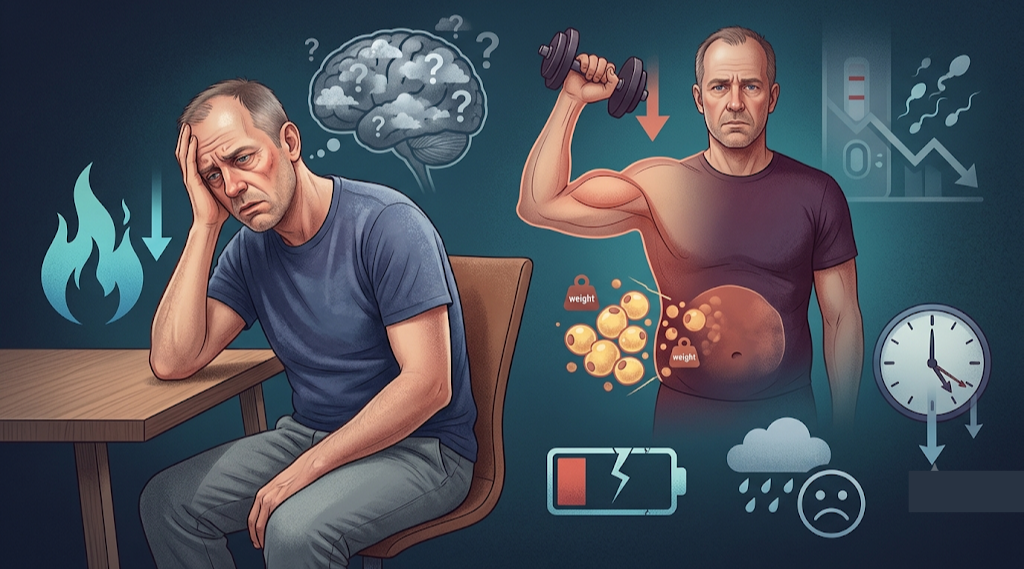
Testosterone deficiency can affect multiple aspects of men’s health. Some symptoms are more closely associated with low testosterone than others.
Recognizing patterns can help men understand when medical evaluation may be appropriate.
Sexual symptoms are among the more specific clinical indicators of testosterone deficiency.
Some men with testosterone deficiency experience persistent tiredness, reduced stamina, and difficulty maintaining their usual activity levels.
Testosterone contributes to maintaining muscle mass and strength. Men with significant testosterone deficiency may experience reduced muscle mass, declining strength, and changes in physical performance.
Low testosterone is associated with changes in body composition, including increased fat mass in some men.
The relationship can work in both directions. Excess body fat, particularly abdominal fat, may also contribute to lower testosterone levels.
Long-standing testosterone deficiency may contribute to reduced bone mineral density and an increased risk of osteoporosis.
Testosterone also stimulates red blood cell production. Men with significant deficiency may develop unexplained anemia.
Low testosterone can result from problems involving the testes, the brain’s hormonal signaling system, or other health conditions.
Understanding the underlying cause is important because treatment may differ depending on the type of deficiency.
Primary hypogonadism occurs when the testes do not produce adequate testosterone despite receiving appropriate hormonal signals.
Secondary hypogonadism occurs when the hypothalamus or pituitary gland does not provide adequate hormonal signals to stimulate testosterone production.
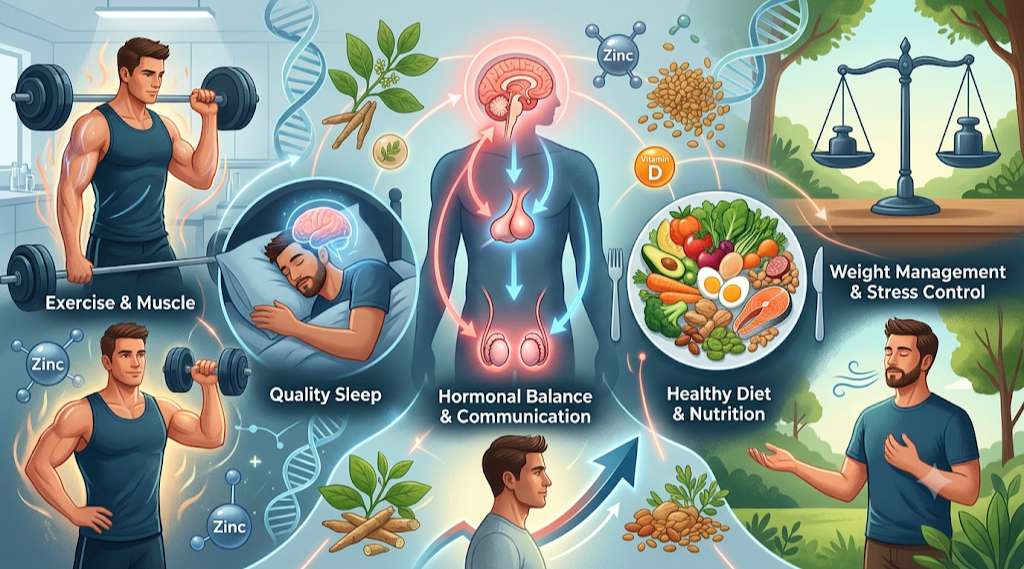
Not every low testosterone result reflects permanent testicular or pituitary dysfunction.
Certain health and lifestyle factors can temporarily or functionally suppress testosterone production.
These include:
TRT can provide meaningful benefits for appropriately diagnosed men. However, introducing testosterone from an external source changes the body’s natural hormonal feedback system.
The brain regulates testosterone production through signals involving luteinizing hormone (LH) and follicle-stimulating hormone (FSH). When external testosterone is introduced, these signals may decrease.
This can suppress natural testosterone production and interfere with sperm development.
The following risks deserve particular consideration.
External testosterone can reduce the hypothalamus and pituitary gland’s signaling to the testes.
As LH and FSH levels decrease, the testes may produce less testosterone and sperm.
One of the most significant risks of TRT is its potential effect on male fertility.
Sperm production depends on hormonal signals and adequate testosterone concentrations within the testes. External testosterone can reduce these signals, resulting in decreased sperm production.
In some men, sperm counts may become extremely low or sperm may no longer be detectable in semen, a condition called azoospermia.
Although sperm production recovers in many men after testosterone is discontinued, recovery can take months and occasionally longer. The timeline is variable and cannot be guaranteed.
Men who are planning to have children now or in the future should discuss reproductive goals with a specialist before starting TRT.
The Endocrine Society and American Urological Association advise against prescribing external testosterone to men planning fertility in the near term.
Testosterone stimulates red blood cell production. In some men receiving TRT, this can cause erythrocytosis, an abnormal elevation in hematocrit.
When hematocrit becomes excessively high, blood viscosity may increase and require medical intervention.
Cardiovascular safety is an important part of the TRT discussion.
The TRAVERSE clinical trial did not demonstrate an increase in major adverse cardiovascular events among the studied men with hypogonadism and cardiovascular disease or elevated cardiovascular risk.
Following the trial, the FDA removed the class-wide boxed warning regarding increased major cardiovascular events in 2025.
However, the FDA also required updated labeling concerning increased blood pressure associated with testosterone products.
Testosterone can influence prostate tissue and may increase prostate-specific antigen (PSA) levels in some men.
Men with known or suspected prostate cancer require appropriate evaluation before considering treatment. Those with existing urinary symptoms may also need further assessment.
Some men experience less serious but still important side effects, including:
The likelihood of these effects varies according to the individual, dose, formulation, and medical history.
Testosterone therapy may worsen untreated severe obstructive sleep apnea in some men.
Symptoms such as loud snoring, interrupted breathing during sleep, morning headaches, and excessive daytime sleepiness should be evaluated.
A low testosterone result alone is not enough to establish a diagnosis.
According to the Endocrine Society, diagnosing hypogonadism requires compatible symptoms or signs alongside unequivocally and consistently low testosterone concentrations.
A proper evaluation generally involves the following steps.
The healthcare provider evaluates symptoms, sexual health, medication use, sleep quality, medical conditions, reproductive goals, and relevant lifestyle factors. This helps identify potential causes of hormonal changes.
Testosterone levels fluctuate throughout the day and may be influenced by food intake, illness, and sleep. For this reason, initial testing generally involves an early-morning total testosterone measurement, preferably under fasting conditions.
Total testosterone measures the overall amount of circulating testosterone, including testosterone bound to proteins and the unbound portion. Free testosterone represents the unbound fraction.
When total testosterone is borderline or sex hormone-binding globulin (SHBG) is altered, free testosterone measurement can help clarify the diagnosis.
Additional tests may be recommended depending on the initial findings.
| Test | Why It May Be Recommended |
|---|---|
| LH and FSH | Help distinguish primary from secondary hypogonadism |
| SHBG | Helps interpret total and free testosterone |
| Free testosterone | Provides additional information when indicated |
| Prolactin | Helps investigate certain pituitary-related causes |
| Complete blood count | Evaluates anemia and hematocrit |
| Thyroid testing | Investigates possible thyroid-related symptoms |
| PSA | Assesses prostate-related concerns when appropriate |
| Glucose and lipid testing | Evaluates relevant metabolic risk factors |
TRT may be considered when a man has compatible symptoms and consistently low testosterone levels, with an appropriate medical evaluation identifying testosterone deficiency.
The goal is to restore testosterone to an appropriate physiological range and improve symptoms or clinical findings associated with the deficiency.
Treatment decisions should consider:
Decisions regarding testosterone replacement therapy are individualized and based on a comprehensive clinical review, including:
TRT is generally not recommended for men who are planning fertility in the near term. It may also be inappropriate in certain other clinical circumstances, including untreated severe sleep apnea, elevated hematocrit, and specific prostate or cardiovascular conditions.
Treatment should never be initiated solely because a man wants more muscle, higher energy, improved athletic performance, or a younger appearance.
In some men, addressing underlying health and lifestyle factors may improve testosterone levels without requiring replacement therapy.
This is particularly relevant when obesity, inadequate sleep, metabolic dysfunction, or other potentially reversible factors contribute to low testosterone.
However, lifestyle changes cannot replace medical treatment in every case, especially when testicular or pituitary dysfunction is present.
Excess body fat, particularly visceral fat around the abdomen, is associated with lower testosterone levels in many men.
A sustainable weight-management approach involving balanced nutrition and regular physical activity may help improve hormonal and metabolic health.
Sleep is important for normal hormonal regulation.
Maintaining a consistent sleep schedule, allowing sufficient time for rest, and addressing sleep disorders can support overall health.
A balanced dietary pattern supports metabolic health and provides nutrients necessary for normal physiological function.
Correcting a documented nutritional deficiency may support overall health. However, taking high-dose supplements without an identified deficiency is not an established treatment for testosterone deficiency.
Resistance training helps maintain muscle mass and physical strength.
Regular aerobic activity supports cardiovascular health, insulin sensitivity, and weight management.
Prolonged stress can affect sleep, eating patterns, physical recovery, and emotional health.
Mindfulness, relaxation techniques, regular movement, and appropriate mental health support may help improve overall well-being.
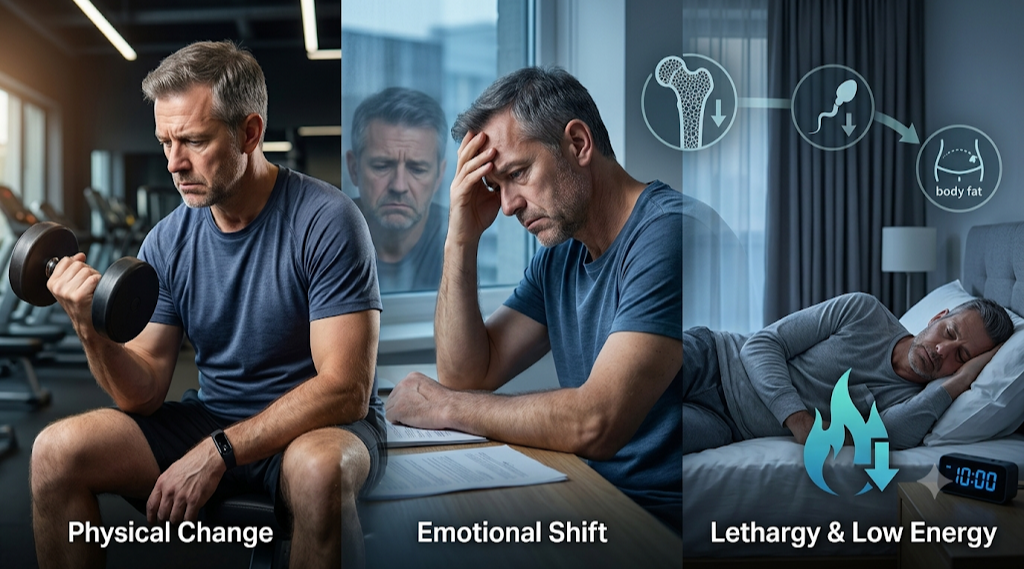
Stopping TRT can be more complicated than discontinuing an ordinary supplement.
When testosterone is supplied externally, the body’s natural production may become suppressed. After treatment stops, the hypothalamus and pituitary gland need time to restore normal hormonal signaling.
During this period, testosterone levels may fall and symptoms associated with deficiency may return.
Some men experience:
Natural testosterone production and sperm production do not necessarily recover at the same rate.
Some men recover relatively quickly, while others may require several months or longer. Recovery may also be incomplete, particularly when an underlying condition continues to affect testosterone production.
Men should not discontinue TRT or begin hormone recovery medications without medical guidance. A healthcare provider can evaluate symptoms, arrange appropriate laboratory testing, and determine whether additional treatment or specialist referral is necessary.
Bioidentical hormone replacement therapy (BHRT) refers to the use of hormones that have the same molecular structure as hormones naturally produced by the human body.
Some regulated prescription testosterone formulations are bioidentical.
However, the term bioidentical does not automatically mean that a product is safer, more effective, or free from side effects.
There is also an important distinction between regulated prescription formulations and compounded hormone preparations.
Compounded medications may be considered in specific circumstances when commercially available products cannot meet an individual’s medical needs. However, compounded products are not reviewed by the FDA for safety, effectiveness, and quality before marketing in the same way as FDA-approved medications.
For men considering hormone therapy, the treatment decision should be based on a confirmed diagnosis, appropriate medical evaluation, product quality, and individualized risk assessment—not simply the terminology used to describe the hormones.
Men’s hormonal health cannot always be understood by looking at a single testosterone measurement.
Fatigue, changes in body composition, reduced sexual interest, and mood disturbances can be influenced by several interconnected factors, including metabolic health, sleep, nutrition, medications, and underlying medical conditions.
At Holistic Medical Wellness, the approach to men’s health is physician-guided and personalized. The practice offers Testosterone Replacement Therapy as part of its broader focus on functional and integrative medicine.
A thoughtful evaluation can consider:
Low testosterone can affect several aspects of men’s health, but not every change in energy, mood, libido, or physical performance is caused by a hormonal deficiency.
Likewise, TRT is neither inherently inappropriate nor a universal solution. Its suitability depends on accurate diagnosis, individual health circumstances, and appropriate medical supervision.
Understanding the underlying cause of symptoms is the first step toward making an informed treatment decision.
If you are experiencing persistent symptoms associated with low testosterone, consider discussing them with a qualified healthcare provider. A comprehensive evaluation can help determine whether hormone testing, lifestyle interventions, treatment of an underlying condition, or testosterone replacement therapy may be appropriate.
Take a more informed approach to men’s hormonal health with physician-guided care at Holistic Medical Wellness.
There is no single laboratory number that establishes the diagnosis for every man. The American Urological Association uses a total testosterone level below 300 ng/dL as a reasonable diagnostic cutoff, but symptoms, repeat testing, laboratory methods, and clinical evaluation must also be considered.
Low testosterone may contribute to reduced energy, changes in muscle mass, and increased body fat. However, fatigue and weight gain can also result from sleep disorders, thyroid conditions, metabolic dysfunction, depression, and other medical problems.
External testosterone suppresses the hormonal signals that regulate natural testosterone production. The extent and duration of suppression vary. Natural production may recover after treatment stops, but recovery is not immediate or guaranteed.
Yes. External testosterone can suppress LH and FSH, reducing sperm production and potentially causing azoospermia. Men planning to have children should discuss fertility-preserving alternatives with an appropriate specialist before starting treatment.
Age alone does not determine whether TRT is appropriate. Older men with confirmed testosterone deficiency may be considered for treatment after evaluating potential benefits, cardiovascular and prostate health, hematocrit, and other individual risk factors.
The TRAVERSE trial did not find an increase in major adverse cardiovascular events in the studied population. However, testosterone products can increase blood pressure, and individual cardiovascular risks still require assessment and monitoring.
In some men, improving body composition, addressing nutritional deficiencies, exercising regularly, and getting adequate sleep may support healthy testosterone levels. These measures are particularly relevant when reversible metabolic or lifestyle factors contribute to low testosterone.
Recovery varies significantly. Some men may recover within weeks or months, while others require longer. Treatment duration, baseline hormonal function, and underlying causes influence recovery.
Not necessarily. Bioidentical describes the molecular structure of a hormone, not its overall safety. Both bioidentical and conventional testosterone preparations require appropriate prescribing, individualized assessment, and medical monitoring.
Routine population-wide screening of asymptomatic men is not generally recommended by the Endocrine Society. Testing is more appropriate when symptoms, clinical findings, or specific medical circumstances suggest testosterone deficiency.
This article is intended for educational purposes only and does not replace professional medical advice, diagnosis, or treatment.
Testosterone replacement therapy is a prescription medical treatment that requires appropriate clinical evaluation and monitoring.