Feel Free To Contact Us at
Subscribe to our Newsletter and get the latest updates in the field of Holistic Medicine
Tesamorelin and ipamorelin both influence the body’s growth hormone (GH) pathway, but they are not interchangeable treatments. Tesamorelin is an FDA-approved GHRH analog for reducing excess abdominal fat in adults with HIV-associated lipodystrophy, while ipamorelin is an investigational growth hormone secretagogue. Although combining them has a biological rationale, there is not enough high-quality clinical evidence to establish that the combination provides superior benefits over tesamorelin alone or other established treatments.
| Question | Evidence-based answer |
|---|---|
| What is tesamorelin? | A synthetic GHRH analog that stimulates endogenous GH secretion |
| What is ipamorelin? | A growth hormone secretagogue that stimulates GH release |
| Is tesamorelin FDA approved? | Yes, for reducing excess abdominal fat in adults with HIV-associated lipodystrophy |
| Is ipamorelin FDA approved? | No established FDA-approved indication |
| Do both affect GH? | Yes |
| Does tesamorelin reduce visceral fat? | Yes, particularly in its approved HIV-associated lipodystrophy population |
| Is the combination proven to be synergistic? | Not established by adequate clinical trials |
Tesamorelin is a synthetic analog of growth hormone-releasing hormone (GHRH). GHRH naturally signals the pituitary gland to release growth hormone.
The pathway can be simplified as:
Tesamorelin → GHRH receptor signaling → GH release → increased IGF-1
Tesamorelin stimulates the body’s own GH secretion rather than directly supplying recombinant human growth hormone.
Its strongest clinical evidence concerns visceral adipose tissue, particularly in adults with HIV-associated lipodystrophy.
Tesamorelin is FDA approved for reducing excess abdominal fat in adults with HIV-associated lipodystrophy.
This distinction is important because FDA approval does not mean tesamorelin is approved as a general treatment for:
Clinical evidence has shown meaningful reductions in visceral adipose tissue in the approved population. One randomized controlled trial involving 404 HIV-infected patients with excess abdominal fat reported an approximately 10.9% reduction in visceral adipose tissue compared with 0.6% with placebo during the primary treatment period.
Ipamorelin is a growth hormone secretagogue, meaning it stimulates the body to release growth hormone through a different pathway from GHRH analogs such as tesamorelin.
Human pharmacological research has demonstrated that ipamorelin can produce a measurable GH response. However, evidence of GH-secretagogue activity does not mean that ipamorelin is an FDA-approved treatment for muscle growth, weight loss, anti-aging, or general hormone optimization.
This difference in regulatory status is important when comparing the two compounds.
| Feature | Tesamorelin | Ipamorelin |
|---|---|---|
| Peptide category | GHRH analog | GH secretagogue |
| Influences GH? | Yes | Yes |
| Increases IGF-1? | Yes | Can influence downstream GH/IGF-1 signaling |
| FDA approved? | Yes, for a specific indication | No established FDA-approved indication |
| Strongest evidence | HIV-associated lipodystrophy and visceral fat | Human pharmacological research |
| Approved general weight-loss treatment? | No | No |
| Approved anti-aging treatment? | No | No |
The proposed rationale is based on their different mechanisms.
Tesamorelin acts through the GHRH pathway, while ipamorelin stimulates GH release through the secretagogue pathway.
Because both can influence GH secretion, some protocols combine them with the expectation of a stronger GH response.
But a biological rationale is not the same as clinical proof.
Evidence that tesamorelin affects GH and evidence that ipamorelin affects GH does not automatically demonstrate that the combination:
To establish those claims, researchers would need well-designed human trials directly comparing the combination with appropriate alternatives.
Not based on sufficient high-quality clinical evidence.
In pharmacology, synergy means that the combined effect is greater than would be expected from the individual effects. While combining two GH-related pathways is biologically plausible, direct evidence proving meaningful clinical synergy remains limited.
This is particularly important when evaluating online claims that describe the combination as a guaranteed muscle-building, fat-burning, recovery, or anti-aging treatment.
Biological plausibility is not proof of clinical benefit.
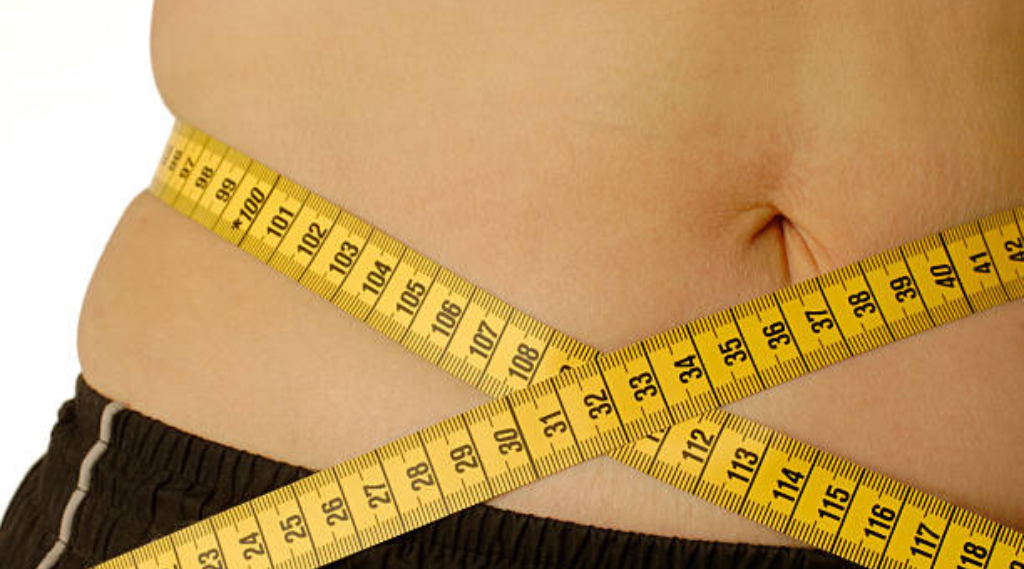
Tesamorelin can reduce visceral adipose tissue, but this is not the same as being a conventional weight-loss medication.
Visceral fat is stored around internal abdominal organs and differs from subcutaneous fat located underneath the skin.
A person may experience a meaningful reduction in visceral fat without seeing a dramatic change on the scale. Therefore, tesamorelin should not be presented as a general-purpose weight-loss or cosmetic belly-fat treatment. Its FDA-approved indication is specifically for adults with HIV-associated lipodystrophy.
Growth hormone and IGF-1 are involved in tissue growth, metabolism, and body composition. Tesamorelin studies have also reported changes in body-composition measures.
However, this does not establish that tesamorelin + ipamorelin reliably produces substantial muscle growth or faster injury recovery in healthy adults.
Muscle development depends on factors such as resistance training, nutrition, sleep, age, hormonal status, genetics, and overall health.
Similarly, while GH and IGF-1 participate in tissue biology, direct evidence supporting this combination as a proven recovery treatment remains insufficient.
Manipulating the GH/IGF-1 pathway is not risk-free.
The FDA prescribing information for tesamorelin identifies potential concerns including:
Tesamorelin is also contraindicated in patients with active malignancy, certain hypothalamic-pituitary disorders, known hypersensitivity, and pregnancy.
The FDA recommends monitoring IGF-1 during tesamorelin therapy because the treatment increases IGF-1. Glucose status should also be evaluated because tesamorelin can affect glucose regulation.
Ipamorelin has a different evidence base and remains investigational for many body-composition, performance, and wellness applications.
No.
Tesamorelin itself has FDA-approved formulations for a specific indication. Ipamorelin does not have an FDA-approved indication for general hormone optimization, muscle growth, weight loss, recovery, or anti-aging.
Most importantly, FDA approval of tesamorelin does not extend to combining tesamorelin with ipamorelin. The combination requires its own evidence to establish safety and effectiveness.
Before considering any peptide combination, ask:
This last question is especially important. An increase in GH or IGF-1 is a biological finding. It does not automatically mean better muscle growth, faster recovery, weight loss, or longevity.
A more evidence-based framework is:
Clinical goal → Diagnosis → Evidence → Individual risk → Treatment → Monitoring → Reassessment
For some patients, tesamorelin may have a legitimate clinical role because it has an FDA-approved indication and supporting evidence. For others, a different treatment may be more appropriate.
Adding ipamorelin should not be viewed as automatically making tesamorelin more effective.
The goal of therapy should not be to push GH or IGF-1 as high as possible. Instead, treatment should focus on achieving a meaningful clinical outcome while managing potential risks.
A healthcare professional may evaluate whether the combination is appropriate for an individual. However, it should not be assumed to be proven or risk-free, as direct evidence showing that tesamorelin + ipamorelin provides superior clinical outcomes remains limited.
Tesamorelin has demonstrated reductions in visceral abdominal fat in adults with HIV-associated lipodystrophy, which is its FDA-approved indication. It should not be presented as a universal cosmetic belly-fat treatment.
Tesamorelin can reduce visceral adipose tissue, but it is not a conventional general-purpose weight-loss medication. Changes in visceral fat do not necessarily result in a major reduction in total body weight.
Tesamorelin can influence body composition, but there is insufficient evidence to promise substantial muscle growth from tesamorelin or tesamorelin + ipamorelin in healthy adults.
No. There is no established clinical evidence that tesamorelin reverses aging. Although it affects the GH/IGF-1 pathway, aging involves many biological systems beyond growth hormone.
Potential adverse effects include elevated IGF-1, fluid retention, edema, joint pain, carpal tunnel symptoms, glucose intolerance or diabetes, hypersensitivity reactions, and injection-site reactions.
Yes. Increasing IGF-1 is an expected effect of tesamorelin. Because prolonged elevation may present concerns, IGF-1 monitoring is recommended during treatment.
No. Tesamorelin has FDA-approved formulations for a specific indication, but the combination with ipamorelin is not an FDA-approved combined therapy.
There is a biological rationale for studying GH-related peptides in recovery, but there is insufficient clinical evidence to establish tesamorelin + ipamorelin as a proven treatment for faster injury recovery or athletic performance.
Tesamorelin is contraindicated in certain situations, including active malignancy, pregnancy, known hypersensitivity, and specific hypothalamic-pituitary disorders. Anyone considering treatment should have their medical history, medications, glucose status, IGF-1, and individual risk factors evaluated by a qualified healthcare professional.

If you are considering tesamorelin, ipamorelin, or another therapy affecting the GH/IGF-1 pathway, a personalized medical evaluation can help determine whether the treatment fits your health goals and risk profile.
At Holistic Medical Wellness, care can begin with understanding your goals, medical history, medications, laboratory findings, and individual risk factors rather than assuming a particular peptide combination is appropriate.