Subtotal $0.00

Feel Free To Contact Us at
- Phone:(888)-896-5577
- Email:dr.koffler@hmwcenter.com

Subscribe to our Newsletter and get the latest updates in the field of Holistic Medicine
Chronic muscular pain can slowly become part of everyday life.
A tight neck after waking up. A painful upper back after sitting at a desk. A lower back that aches after standing for too long. A shoulder that always seems to contain the same painful “knot.”
At first, these symptoms may seem manageable. But when muscle pain persists for weeks or months, it can begin to affect sleep, movement, exercise, work, and overall quality of life.
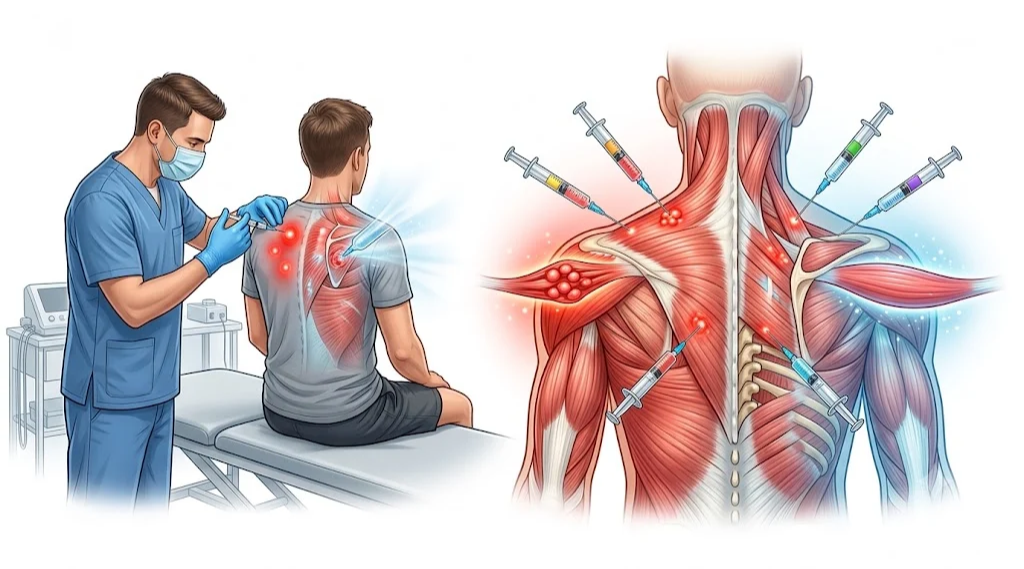
One potential treatment for selected patients is a trigger point injection (TPI).
Trigger point injections are designed to target painful areas within muscle that are associated with myofascial pain. They may provide short-term pain relief and, in appropriate patients, make it easier to participate in rehabilitation and other treatments.
However, TPI is not appropriate for every type of chronic pain. Understanding where the pain comes from is an important first step.
Trigger point injections may help some people with chronic muscular pain when active myofascial trigger points are contributing to their symptoms.
A healthcare professional identifies a painful trigger point and places a needle into the targeted muscle. Depending on the treatment plan, the injection may contain a local anesthetic or another medication.
Research on chronic myofascial pain suggests that TPI can be useful for selected patients, but evidence remains mixed regarding the best injection substance and the duration of benefit. A systematic review of TPI for chronic myofascial neck and back pain found that studies did not establish one injectate as consistently superior to another.
For that reason, TPI is generally best considered as one part of a broader pain-management and rehabilitation plan.
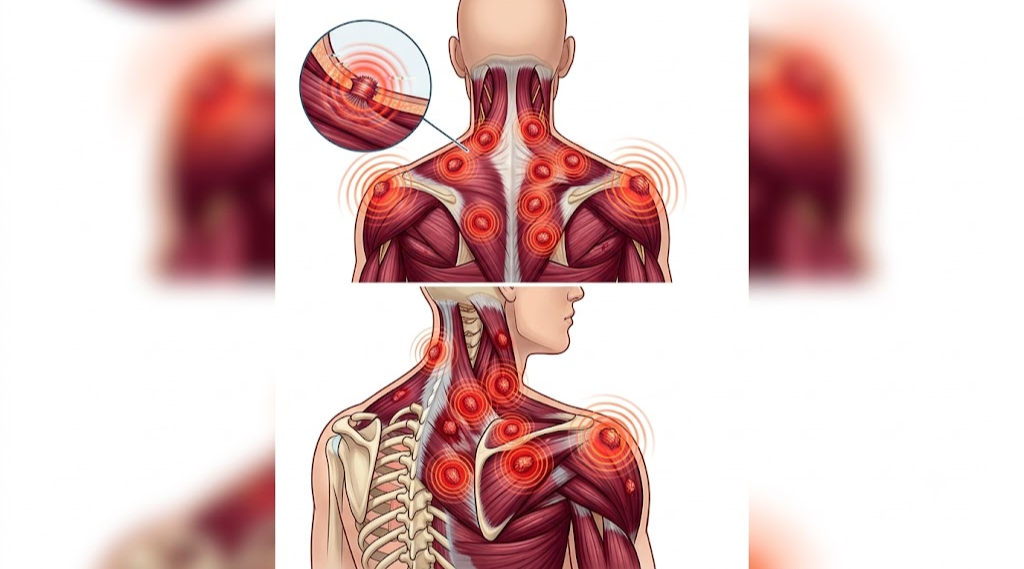
Chronic pain is generally defined as pain that persists or recurs for more than three months.
Chronic muscular pain can have many possible causes, including:
Sometimes the muscle itself is the primary source of pain. In other cases, muscular pain occurs alongside another condition.
For example, someone with a spinal or joint problem may also develop secondary muscle tension.
That distinction matters because treating a trigger point alone may not address the underlying source of pain.
Trigger points are sensitive areas within skeletal muscle that can produce localized tenderness and, in some cases, pain that is felt somewhere else.
They are sometimes described by patients as:
Myofascial pain can occur in different areas of the body, including the neck, shoulders, upper back, lower back, hips, and extremities.
A medical examination can help determine whether a patient’s symptoms are consistent with myofascial pain or whether another pain generator may be involved.
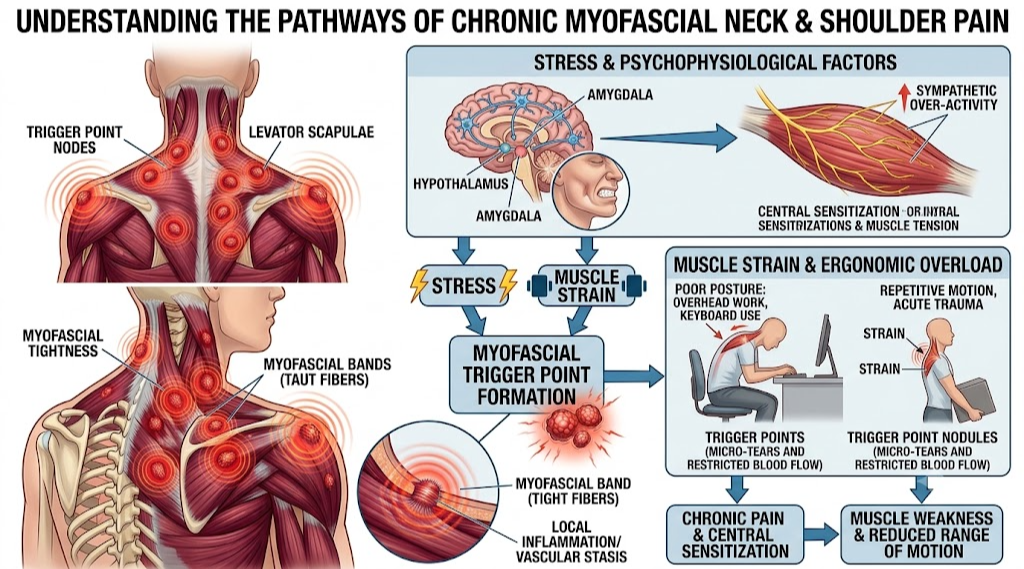
There is not always one identifiable cause.
Research suggests that myofascial pain may be associated with factors such as chronic strain, trauma, joint dysfunction, prolonged postures, physical inactivity, and other biomechanical stresses.
Common contributors may include:
Repeated movements can continuously load the same muscle groups.
This can occur during sports, manual labor, computer work, driving, or other repetitive activities.
Remaining in one position for extended periods can increase muscular strain.
For example, prolonged forward-head positioning may contribute to neck and upper-back muscle discomfort.
Muscles may remain tense or develop altered movement patterns after an injury, potentially contributing to persistent pain.
Increasing exercise intensity, training volume, or physical workload too quickly may place excessive stress on muscles.
Psychological stress can contribute to increased muscle tension and may make existing pain more difficult to manage.
Long periods of inactivity can contribute to deconditioning and altered movement patterns, which may increase musculoskeletal discomfort in some people.
Symptoms can vary depending on the muscle involved.
You may experience:
Some people describe the sensation as a persistent knot that never completely goes away.
During a TPI procedure, a clinician identifies the suspected trigger point and inserts a small needle into the targeted muscle.
The injection may contain a local anesthetic or another substance depending on the clinical situation.
The intended goals can include:
TPI may be considered when an examination identifies clinically significant trigger points that appear to be contributing to persistent pain.
It may be particularly relevant when:
TPI should not automatically be used simply because someone has chronic muscle pain.
The underlying diagnosis remains important.
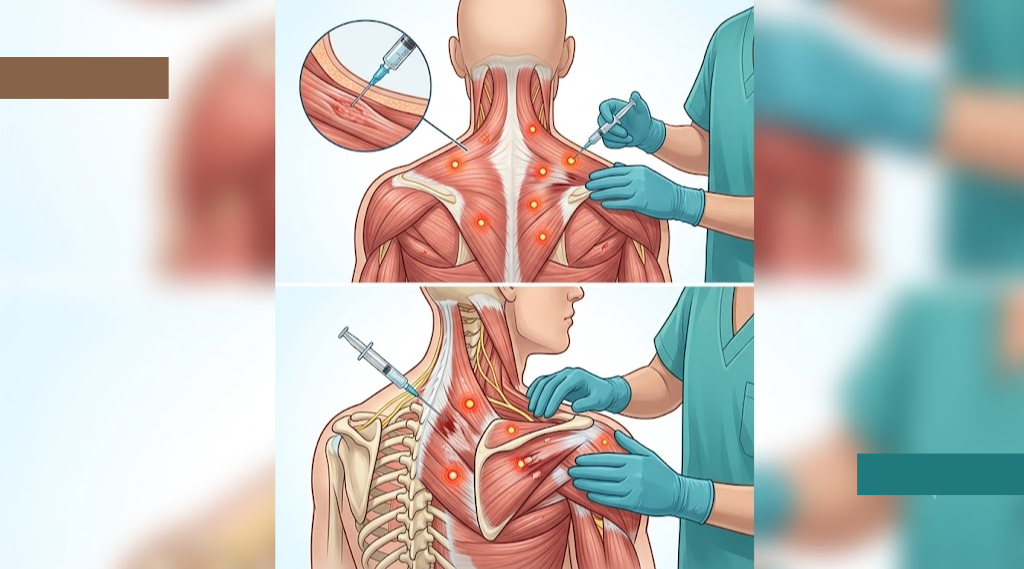
This is one of the most important distinctions to understand.
Chronic pain can originate from:
For example, pain caused primarily by nerve compression may require a completely different treatment strategy.
Likewise, arthritis, significant tendon disease, spinal disorders, and other structural conditions may need targeted management.
A trigger point injection may sometimes address a secondary muscular component of these conditions, but it does not necessarily treat the underlying disorder.
The answer depends on the type of pain and the individual patient.
Research supports potential benefits from TPI in certain myofascial pain conditions, but the evidence is not definitive.
A systematic review examining chronic myofascial neck and back pain included 14 studies. It found mixed results across different injection substances and concluded that there was insufficient evidence to identify one injectate as superior to another.
Another systematic review and meta-analysis found that TPI reduced pain more than medical management alone in patients with acute myofascial pain. However, those findings should not automatically be applied to chronic muscular pain.
This distinction is important.
TPI may provide meaningful symptom relief for some people, but individual responses vary and long-term benefit is not guaranteed.
There is no single timeframe that applies to everyone.
Some patients may experience noticeable relief relatively quickly, while others may experience limited or temporary improvement.
Duration can depend on:
Because chronic muscular pain can have multiple contributing factors, treating the trigger point without addressing those factors may provide only temporary improvement.
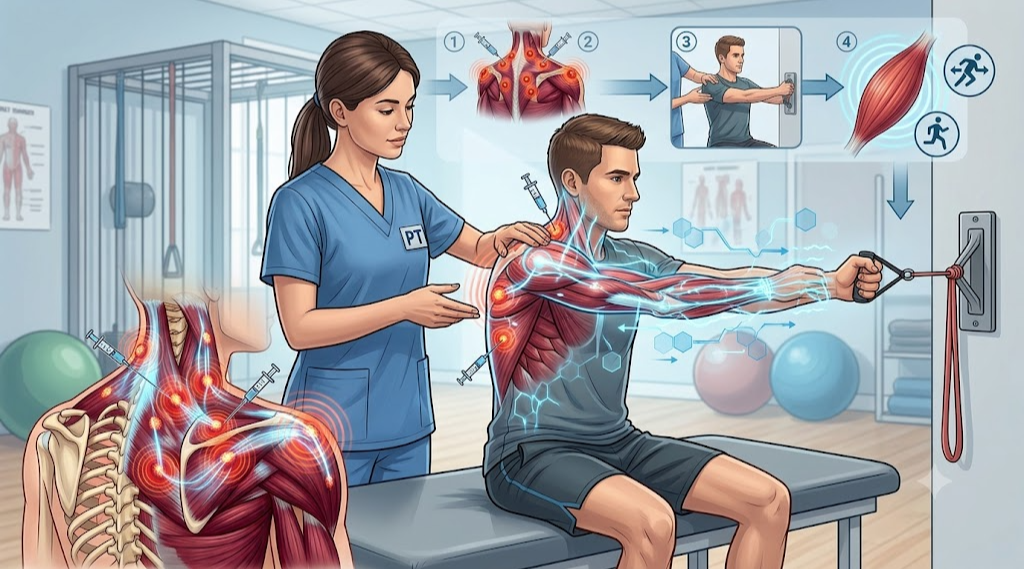
Pain reduction is often only the beginning.
Once pain is more manageable, rehabilitation may help improve:
A review of TPI treatment emphasizes that myofascial pain is generally best approached with a multimodal plan that can include injection therapy, physical therapy, and postural or ergonomic correction.
This creates a more complete treatment strategy:
Identify the pain source → reduce symptoms → restore movement → strengthen the affected area → address contributing factors.
Depending on the diagnosis, treatment may include:
A physical therapist can develop exercises to improve strength, mobility, flexibility, and movement mechanics.
Massage or other hands-on techniques may be used to address muscle tension and improve mobility.
Adjusting a workstation, sleeping position, lifting technique, or repetitive activity may help reduce ongoing muscular stress.
Targeted mobility work may help restore comfortable movement.
Progressive strengthening can improve the ability of muscles to tolerate normal physical demands.
Temporarily reducing activities that consistently aggravate symptoms may help support recovery.
The appropriate combination depends on the diagnosis and individual circumstances.
Before the procedure, your healthcare provider will typically review your symptoms and medical history and examine the painful area.
The provider may assess:
During the procedure, the skin is cleaned and the needle is placed into the targeted trigger point.
The exact technique and injection substance depend on the patient’s condition and the provider’s clinical judgment.
After treatment, temporary soreness or tenderness can occur around the injection site.
Your clinician will provide instructions about activity and follow-up.
TPI is generally considered a minimally invasive procedure, but it still carries potential risks.
Possible complications can include:
The risk profile can vary depending on the muscle being treated and the substance injected.
A trained healthcare professional should therefore determine whether TPI is appropriate.
TPI may not be appropriate when the pain is primarily caused by a condition that does not involve myofascial trigger points.
Additional evaluation may also be needed for people with:
Your provider can determine whether additional testing or a different treatment approach is necessary.
Pain relief alone does not always prevent recurrence.
If the factors contributing to chronic muscular pain remain unchanged, symptoms may return.
Depending on the situation, prevention may involve:
At Holistic Medical Wellness, the focus is on understanding the individual rather than treating pain as an isolated symptom.
HMW describes its approach as physician-guided and considers factors including medical history, medications, laboratory results, nutrition, sleep, stress, lifestyle, and personal health goals when developing a care plan.
For someone experiencing persistent muscular pain, this broader assessment can help determine whether trigger point injections are appropriate or whether another treatment strategy may be more suitable.
When trigger points are contributing to symptoms, TPI may be incorporated into a broader plan that can include rehabilitation, movement strategies, and other supportive treatments.
Hormonal treatment can help manage irregular or heavy bleeding in certain conditions, but it is not appropriate for every cause of irregular periods. Treatment depends on the underlying diagnosis.
Common causes include PCOS, thyroid disorders, problems with ovulation, pregnancy, significant changes in weight, excessive exercise, stress, perimenopause, medications, and structural conditions such as fibroids or polyps.
No. Hormone replacement therapy and hormonal contraception have different purposes, although some hormonal contraceptives can also be used to manage irregular or heavy menstrual bleeding.
Hormone therapy may make bleeding lighter or more predictable in some people during perimenopause, but the effect depends on the type of therapy and individual circumstances.
Hormonal contraceptives are an established treatment option for menstrual abnormalities associated with PCOS. Other treatments may also be appropriate depending on metabolic health, symptoms, and reproductive goals.
Depending on symptoms, evaluation may include a pregnancy test, blood tests, thyroid testing, complete blood count, iron studies, and sometimes pelvic imaging or other investigations.
Possible side effects can include spotting or bleeding, breast tenderness, headaches, and bloating. Risks vary by treatment and individual health history.
Yes. Hormone therapy can be an option for appropriate people experiencing menopause-associated symptoms during perimenopause. The choice should be individualized based on symptoms, age, health history, and risk factors.
Not always. Hormonal treatment may manage bleeding or symptoms without correcting the underlying condition. Identifying the cause of the irregular cycle is therefore an important part of treatment.
Speak with a healthcare professional if your previously regular periods become irregular, periods are more than 90 days apart, bleeding lasts longer than 7 days, bleeding is unusually heavy, or you experience significant pain, dizziness, or other concerning symptoms.