Feel Free To Contact Us at
Subscribe to our Newsletter and get the latest updates in the field of Holistic Medicine
Do you struggle with bloating, food sensitivities, fatigue, brain fog, skin issues, or autoimmune symptoms that seem difficult to explain?
Many individuals spend years searching for answers while standard testing reveals little or no obvious cause. Yet growing research suggests that the health of the intestinal barrier may play a significant role in overall wellness.
One of the most discussed concepts in functional medicine is intestinal permeability, commonly known as leaky gut. While intestinal permeability itself is a recognized physiological phenomenon, functional medicine practitioners often investigate whether excessive permeability may be contributing to chronic inflammation, immune dysfunction, digestive symptoms, and other health concerns.
Rather than simply managing symptoms, functional medicine seeks to understand why the gut barrier may be compromised and what can be done to restore balance.
The goal is not merely digestive relief—but supporting the foundation upon which many aspects of health depend.
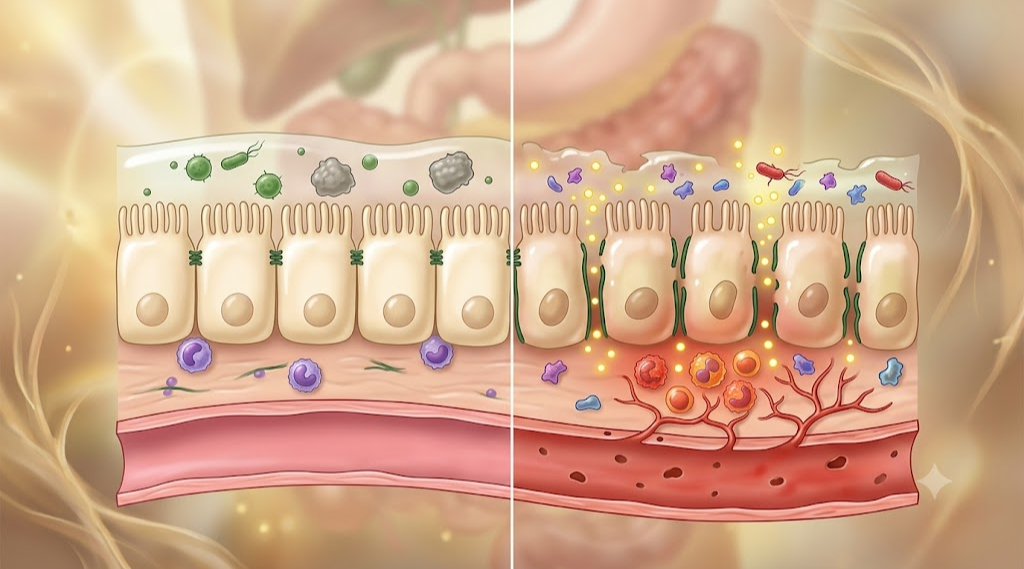
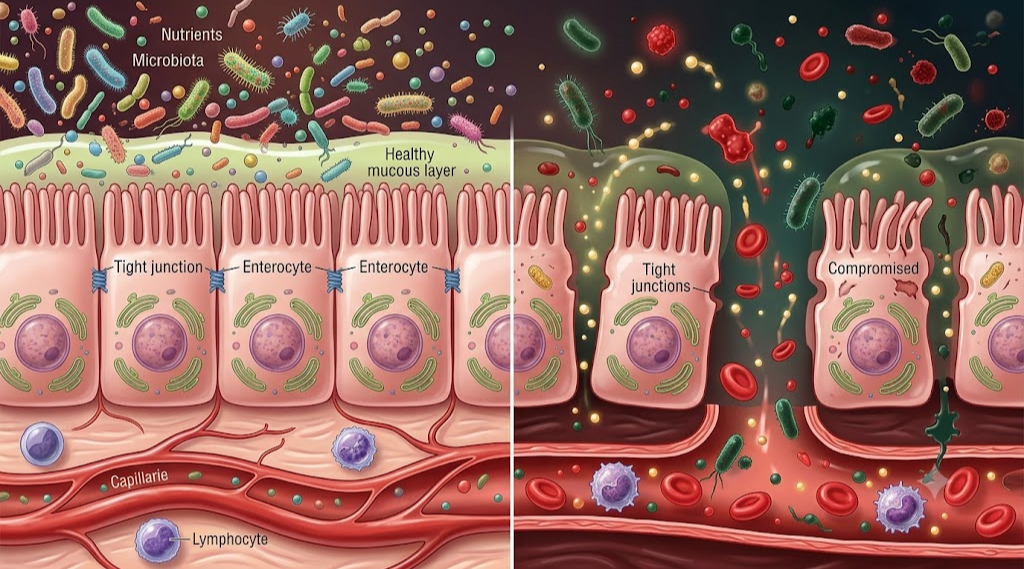
The intestinal lining serves as a protective barrier between the digestive tract and the bloodstream.
Under normal conditions, this barrier allows:
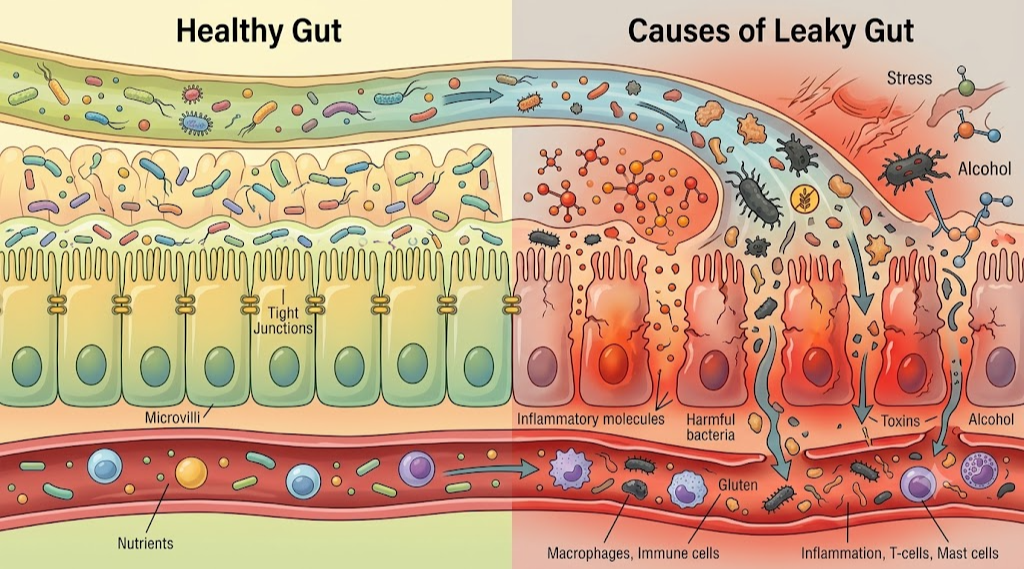
The intestinal wall is made up of specialized cells connected by structures known as tight junctions.
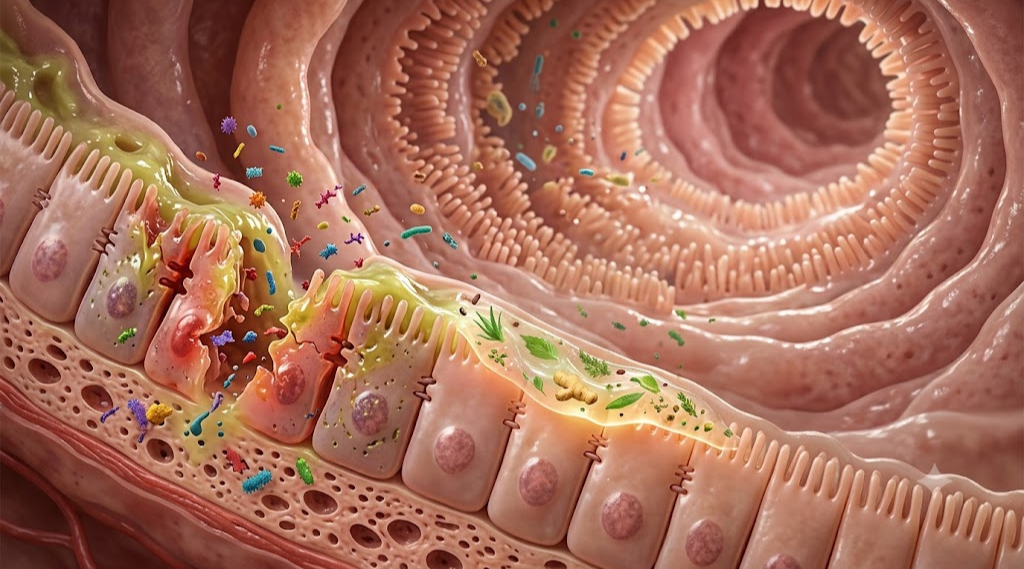
When these tight junctions become disrupted, the intestinal barrier may become more permeable than intended. This increased permeability may allow substances such as:
to cross into circulation and potentially trigger immune responses.
This process is commonly referred to as “leaky gut.”
The digestive system does much more than process food.
The gut plays critical roles in:
Approximately 70% of the immune system resides within the gut-associated lymphoid tissue (GALT), highlighting the intimate connection between digestive and immune function.
When gut barrier integrity is compromised, inflammation and immune activation may increase throughout the body.
This is why functional medicine often views gut health as a foundational component of overall wellness.
Symptoms associated with increased intestinal permeability can vary significantly from person to person.
Possible symptoms may include:
It is important to note that these symptoms are not specific to leaky gut and can occur with many health conditions. Proper evaluation is essential.
Functional medicine focuses heavily on identifying and addressing root causes.
Several factors may contribute to increased intestinal permeability.
Persistent inflammation can disrupt tight junction function and weaken the intestinal barrier over time.
Common inflammatory triggers include:
Highly processed diets may contribute to gut dysfunction.
Potential dietary contributors include:
These factors may alter the gut microbiome and increase inflammatory activity.
The microbiome consists of trillions of microorganisms that help regulate digestion, immunity, and metabolism.
When beneficial bacteria decrease and harmful organisms become dominant, intestinal barrier function may suffer.
The gut and brain communicate constantly through the gut-brain axis.
Long-term stress can influence:
This is one reason why stress management is considered an important part of gut healing.
Certain medications may affect intestinal integrity, including:
These medications should never be stopped without physician guidance.
Certain infections and digestive disorders may contribute to gut barrier dysfunction, including:
Functional medicine approaches intestinal permeability differently than symptom-focused care.
Rather than asking:
“What medication treats this symptom?”
The focus becomes:
“Why is the intestinal barrier compromised in the first place?”
This root-cause approach allows practitioners to identify contributing factors that may otherwise go unnoticed.
One hallmark of functional medicine is personalized evaluation.
Depending on individual needs, practitioners may recommend:
May assess:
Can provide insight into:
Certain individuals may benefit from evaluating dietary triggers that contribute to symptoms.
May evaluate:
Testing recommendations vary by practitioner and patient needs.
Once underlying contributors are identified, treatment focuses on restoring intestinal integrity and supporting whole-body health.
Diet often forms the foundation of a gut-healing strategy.
Common recommendations may include:
Anti-Inflammatory Foods
Vegetables
Fruits
Healthy fats
Lean proteins
Omega-3-rich foods
Removing Potential Triggers
Depending on the individual, temporary elimination of certain foods may be considered to identify symptom triggers.
Supporting Nutrient Intake
Particular attention may be given to nutrients involved in gut repair and immune function.

A healthy microbiome supports:
Strategies may include:
Gut healing is not solely about food.
Stress reduction may play a critical role in recovery.
Common approaches include:
Supporting the nervous system often supports digestive function as well.
Daily habits can significantly influence gut health.
Functional medicine commonly emphasizes:
These foundational factors help create conditions that support healing.
When underlying contributors are addressed, patients may experience improvements in multiple areas of health.
Potential benefits may include:
Improved Digestive Function
Less bloating
Better bowel regularity
Reduced digestive discomfort
Enhanced Nutrient Absorption
A healthier intestinal lining may improve the body’s ability to absorb essential nutrients.
Better Energy Levels
Reduced inflammation and improved digestion may support overall vitality.
Improved Immune Function
A balanced gut environment can help support healthy immune regulation.
Support for Chronic Health Conditions
Some individuals may notice improvements in conditions influenced by inflammation and immune dysfunction.
Results vary based on individual health status and underlying causes.
Functional medicine may be particularly valuable if you:
It is not intended to replace emergency or conventional medical care. Instead, many patients benefit from integrating both approaches.
Leaky gut, or intestinal permeability, occurs when the intestinal lining becomes more permeable, allowing unwanted substances to pass into the bloodstream.
Common causes include chronic stress, poor diet, gut infections, inflammation, certain medications, and microbiome imbalances.
Symptoms may include bloating, food sensitivities, fatigue, brain fog, digestive discomfort, skin issues, and joint pain.
Functional medicine focuses on identifying root causes, reducing inflammation, restoring gut balance, and supporting intestinal healing.
Increased intestinal permeability may contribute to immune reactions that can make food sensitivities more common.
Whole foods, vegetables, fruits, healthy fats, lean proteins, and fiber-rich foods are commonly recommended to support gut health.
Practitioners may use health history, symptom evaluation, blood work, stool testing, and other functional assessments when appropriate.
Yes. Chronic stress can affect the gut-brain axis, increase inflammation, and negatively impact gut barrier function.
Recovery varies by individual and depends on factors such as diet, lifestyle, underlying causes, and overall health.
Many patients seek functional medicine because it addresses potential root causes and provides personalized strategies to support gut health and overall wellness.
Many gut-supportive plans emphasize:
Recommendations should be individualized.
Digestive symptoms are often the body’s way of signaling that something deeper needs attention.
Functional medicine offers a personalized, evidence-informed approach to understanding intestinal permeability by identifying root causes, restoring gut integrity, reducing inflammation, and supporting long-term wellness.
If you’ve been struggling with persistent digestive concerns, food sensitivities, fatigue, or unexplained symptoms, exploring your gut health may be one of the most important steps you can take toward improving your overall well-being.
Your journey toward a healthier gut—and a healthier you—starts with understanding the root cause, not just the symptoms.