BPC-157 Capsules vs Injection: What’s the Real Difference?
Here is the part most people miss: the same peptide can act very differently depending on how it enters your body.
That is why the “BPC-157 oral vs injection” question matters. It is not just about choosing capsules because they are easier or injections because they sound stronger. The real question is: where do you want the peptide to work?
BPC-157 is a peptide that has gained attention for gut health, tissue repair, tendon recovery, joint support, and overall healing. But there is one important truth: most of the research is still early, and much of it comes from animal studies, not large human trials. So while BPC-157 is popular in peptide therapy, it should be used carefully and only with guidance from a licensed medical provider.
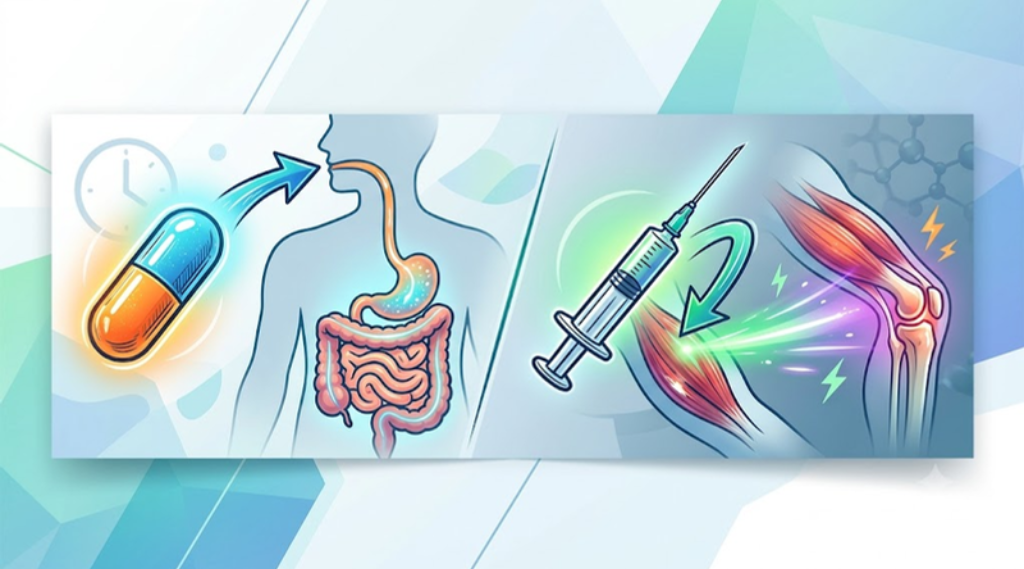
The biggest difference between oral BPC-157 and injectable BPC-157 comes down to absorption.
Oral BPC-157 is usually taken as a capsule, tablet, or liquid. Because it passes through the digestive system, it is often discussed for gut-related goals like stomach lining support, intestinal repair, and digestive inflammation.
Injectable BPC-157 is placed under the skin or into muscle, so it may reach the bloodstream more directly. That is why injections are often discussed for tendon, ligament, muscle, and joint recovery.
So which one is better?
The honest answer is: it depends on your goal.
What Is BPC-157?
BPC-157 is a synthetic peptide made from a protein fragment found in the stomach. It has been studied for its possible role in protecting tissue, supporting repair, and helping the body respond to injury or irritation.
Most of the current research is still early, and BPC-157 is not FDA-approved to treat any condition. That means it should not be viewed as a guaranteed solution or used without medical guidance.
The key thing to understand is simple: BPC-157 is being studied for repair and recovery, but the way it is taken — oral or injection — can change how it may act in the body.
Oral BPC-157: How It Works
Oral BPC-157 is usually taken as a capsule, tablet, or liquid.
It travels through the digestive system first, which is why it is often discussed for gut-focused goals.
People may consider oral BPC-157 for:
Stomach lining support
Intestinal comfort
Digestive recovery
Gut health support
The biggest benefit is convenience.
No needles
No injections
No special technique
Easier for daily use
The main limitation is absorption.
Since it passes through digestion, less of it may reach the rest of the body compared to injection.
This is why oral BPC-157 may be a better fit for people focused on gut support, while injectable BPC-157 may be discussed for deeper tissue or injury-related goals.
Injectable BPC-157: How It Works
Injectable BPC-157 is usually given as a subcutaneous injection under the skin or, in some cases, an intramuscular injection.
Because it does not pass through the digestive system first, it may enter the body in a more direct way.
This is why injectable BPC-157 is often discussed for:
The biggest difference is simple: oral BPC-157 goes through digestion first, while injectable BPC-157 enters the body more directly.
Which Form Is Better for Gut Health?
For gut-focused goals, oral BPC-157 is usually the form people ask about first.
The reason is simple: oral BPC-157 travels through the stomach and intestines, so it may have more direct contact with the digestive tract.
This is why it is often discussed for:
Stomach lining support
Gut irritation
Intestinal comfort
Digestive recovery
General gut health support
Injectable BPC-157 may still affect the body more broadly, but it does not pass through the gut in the same direct way.
So, for someone mainly focused on gut health, oral BPC-157 may be the more practical option to discuss with a licensed provider.
Which Form Is Better for Tendons, Joints, and Muscle Recovery?
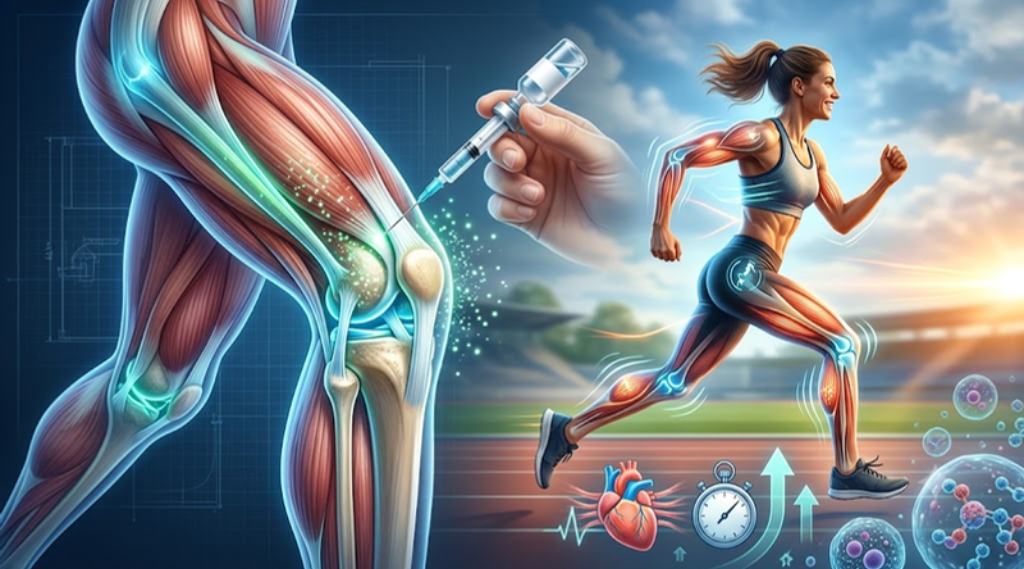
For tendon, joint, ligament, or muscle-related goals, injectable BPC-157 is usually the form people ask about most.
The reason is that injections do not have to pass through the digestive system first. This may allow the peptide to reach the bloodstream and surrounding tissues more directly.
Injectable BPC-157 is often discussed for:
Tendon strain support
Ligament recovery support
Muscle repair support
Joint discomfort
Sports injury recovery
Post-workout recovery support
Oral BPC-157 may still be useful for some people, but it is usually not the first choice when the main goal is deeper tissue or injury-related recovery.
Onset: Which Works Faster?
Injectable BPC-157 is often discussed as the faster option because it enters the body more directly.
Oral BPC-157 may take longer because it has to pass through the digestive system first.
In simple terms:
Injection may work faster for tissue-related goals because it has more direct absorption.
Oral may work slower but can still make sense for gut-focused support.
Response time can vary based on the person, the goal, the dose, and the provider’s plan.
The key point: faster does not always mean better. The right form depends on what you are trying to support.
Safety: Oral vs Injectable BPC-157
Both oral and injectable BPC-157 should be used with caution because human research is still limited.
With oral BPC-157, some people may notice mild digestive discomfort, especially if they are sensitive to supplements or peptides.
With injectable BPC-157, the bigger concern is the injection process itself. Poor technique or unclean supplies can increase the risk of irritation, bruising, or infection.
Common safety points to consider:
BPC-157 is not FDA-approved to treat medical conditions.
Long-term safety in humans is not fully known.
Product quality matters a lot.
Research-use peptides bought online may be mislabeled or unsafe.
People taking medications should speak with a provider first.
Injections should only be used with proper medical guidance.
FDA Status and Legal Considerations
BPC-157 is not FDA-approved to treat any medical condition.
This means the FDA has not fully reviewed it for safety, effectiveness, or quality like an approved prescription drug.
Some providers may discuss BPC-157 as part of peptide therapy, but it should still be used carefully. Compounded peptides are different from FDA-approved medications, and product quality can vary.
This is why you should avoid random “research-use only” peptides online.
Are there any risks with my medications or health history?
How will we track progress or side effects?
Where is the peptide coming from?
The key point: a good peptide plan should be personal, safe, and monitored — not copied from the internet.
FAQs
Not always. Oral BPC-157 may make more sense for gut-focused support, while injectable BPC-157 may be discussed for deeper tissue, joint, tendon, or muscle-related goals.
Oral BPC-157 is often discussed for gut health because it passes through the digestive system and may have more direct contact with the stomach and intestines.
Injectable BPC-157 is often discussed for tendons, joints, ligaments, and muscles because it enters the body more directly than oral forms.
No. BPC-157 is not FDA-approved to treat any medical condition.
Be careful. Random “research-use only” peptides online may be low quality, mislabeled, or unsafe. It is safer to work with a licensed provider who can guide product quality, dosing, and monitoring.
Oral vs Injection — Which Is Better?
There is no single “best” form of BPC-157 for everyone.
The better choice depends on the goal:
Oral BPC-157 may make more sense for gut-focused support.
Injectable BPC-157 may make more sense for tendon, joint, muscle, or injury-related support.
The most important thing is not just the form. It is the quality of the peptide, the right dose, and medical supervision.
The information provided on this blog and website is for informational and educational purposes only and is not intended as a substitute for professional medical advice, diagnosis, or treatment. Always seek the guidance of your physician or another qualified health provider with any questions you may have regarding a medical condition, diagnosis, or treatment plan. Do not disregard or delay professional medical advice because of information you have read on this website.
The content presented may include discussions of wellness therapies, dietary supplements, compounded medications, functional medicine services, and other integrative or alternative treatments that are not evaluated or approved by the U.S. Food and Drug Administration (FDA). These services and products are not intended to diagnose, treat, cure, or prevent any disease.
The content is provided “as is,“ without warranties of any kind, either express or implied. While we strive to ensure accuracy, we make no guarantees regarding the completeness, timeliness, or accuracy of the information presented. The website and its authors disclaim any liability for errors, omissions, or outcomes related to the use of the information provided.
Reference to any specific tests, products, procedures, healthcare professionals, or opinions is not an endorsement or recommendation unless explicitly stated. Links to external websites are provided for convenience and do not constitute an endorsement or guarantee of the content contained therein.
Your use of this website constitutes your acceptance of this disclaimer and any future modifications. If you do not agree, please do not use the site.
This disclaimer shall be governed by and construed in accordance with the laws of the State of Florida, without regard to conflict of law principles
Dr. Koffler is a Physiatrist, specializing in Physical Medicine & Rehabilitation.
Graduated from the Sackler School of Medicine at Tel Aviv University in 1993 Dr. Koffler completed a one-year internship in internal medicine at Roosevelt Hospital in New York City.
Residency in Physical Medicine and Rehabilitation at the Rusk Institute at NYU Medical Center in New York City. Board certified in 1998.
Trained in acupuncture at Helms Medical Institute at UCLA His medical practice incorporates proven conventional western medicine integrating eastern alternative practices.
Medical Director of several medical clinics in NYC, Stamford CT, and Miami Beach, FL.